When not to watch a meteor shower — why I'm not staying up for the Orionids
I used to think being interested in the night sky meant I had to try every meteor shower. If a calendar said "peak," I interpreted that as an instruction. I'd set an alarm, find several layers of clothing and go outside at around 2:00 a.m. when even the neighborhood cats seemed surprised to see me. Then I'd spend an increasingly resentful 45 minutes staring upward, occasionally see one meteor and wonder whether I was somehow doing it all wrong. As I've grown into stargazing, I've become much more selective.
The Orionids peak next week, and normally I'd be tempted. These fast meteors come from debris from Halley's Comet, which is enough of a connection to make almost anyone want to go outside. However, another object is in the sky this year — a big, bright waxing gibbous moon that will brighten the night sky and make "shooting stars" very hard to see.
That doesn't make the Orionids unobservable. In fact, there is a narrow window when the night sky will be free from moonlight. But it does make me far less inclined to sacrifice an entire night for them, and I certainly won't be trying to spend the night camping under a dark sky in a remote rural location far from light pollution. I've discovered that knowing when not to observe is an underrated stargazing skill.
What's happening and when to look
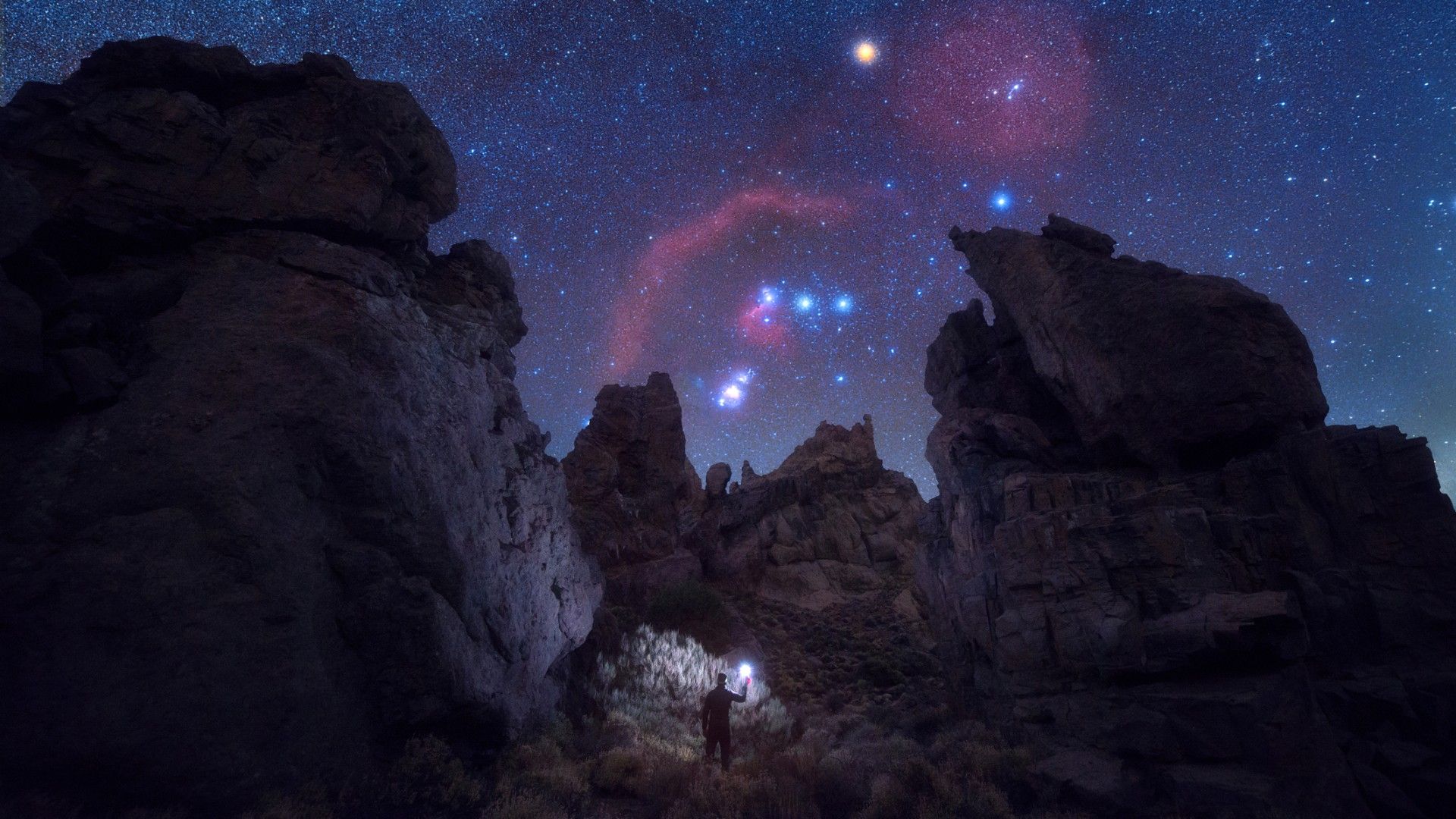
The Orionids are active from Oct. 2 through Nov. 7, with their 2026 maximum expected overnight on Oct. 21-22. They appear to radiate from a point near Orion, although the meteors themselves can streak across almost any part of the sky.
The shower happens because Earth crosses a stream of debris left behind by Halley's Comet, which was last in the inner solar system in 1986 and will return in 2061. Those tiny particles hit our atmosphere at roughly 41 miles (66 kilometers) per second, making Orionids particularly fast meteors.
Under ideal conditions, the International Meteor Organization gives the shower a zenithal hourly rate of 20 or more around maximum. But "zenithal hourly rate" is not the same as promising that I will personally see 20 meteors while standing in my backyard for an hour. It assumes an excellent dark sky, a well-placed radiant and unobstructed viewing. In reality, that's impossible — at the very least you'd have to have eyes in the back of your head. And on each side.
This year adds another complication. The moon reaches first quarter on Oct. 18 and continues waxing toward full on Oct. 26. On the peak night of the Orionids, an 80%-illuminated waxing gibbous moon will be in the night sky as it gets dark on Oct. 21 and sets around 03:00 a.m. local time across Europe and North America on Oct. 22. You can probably see the workaround. Sunrise is roughly 06:30 a.m. local time, which means astronomical darkness — when the sun is more than 18 degrees below the horizon, meaning complete darkness — lasts until around 05:00 a.m. local time (these times work as a ballpark, but you can (check the exact times of moonset and sunrise for your location on Time and Date).
So there is a dark window before dawn, and that is when I would try to see the shower if I were determined to see it. The Orionid radiant is also much better placed after midnight than it is in the evening.
Knowing exactly what's going to happen in the sky turns a casual meteor watch into a rather more calculated exercise.
How and when I'm watching it
My plan for the Orionids this year is the same as usual — after checking the moon phase and the moonset and sunrise times, there's one more variable. The weather forecast first.
If the forecast is excellent and I'm feeling enthusiastic, I'll target the period after moonset and before morning twilight on Oct. 22. If it's due to be cloudy, I'm staying in bed.
This sounds obvious, but I think beginners are sometimes given the impression that successful stargazing requires heroic commitment. It doesn't. A meteor shower is not a performance that disappears the moment the advertised "peak" passes. The Orionids have a relatively broad period of activity, so meteors can appear on nights either side of maximum, too.
If I do go outside at 3:00 a.m., I'll do so without two hugely valuable resources for meteor showers — a lawn chair and bags of patience.
Stargazer's corner: October 16-22, 2026
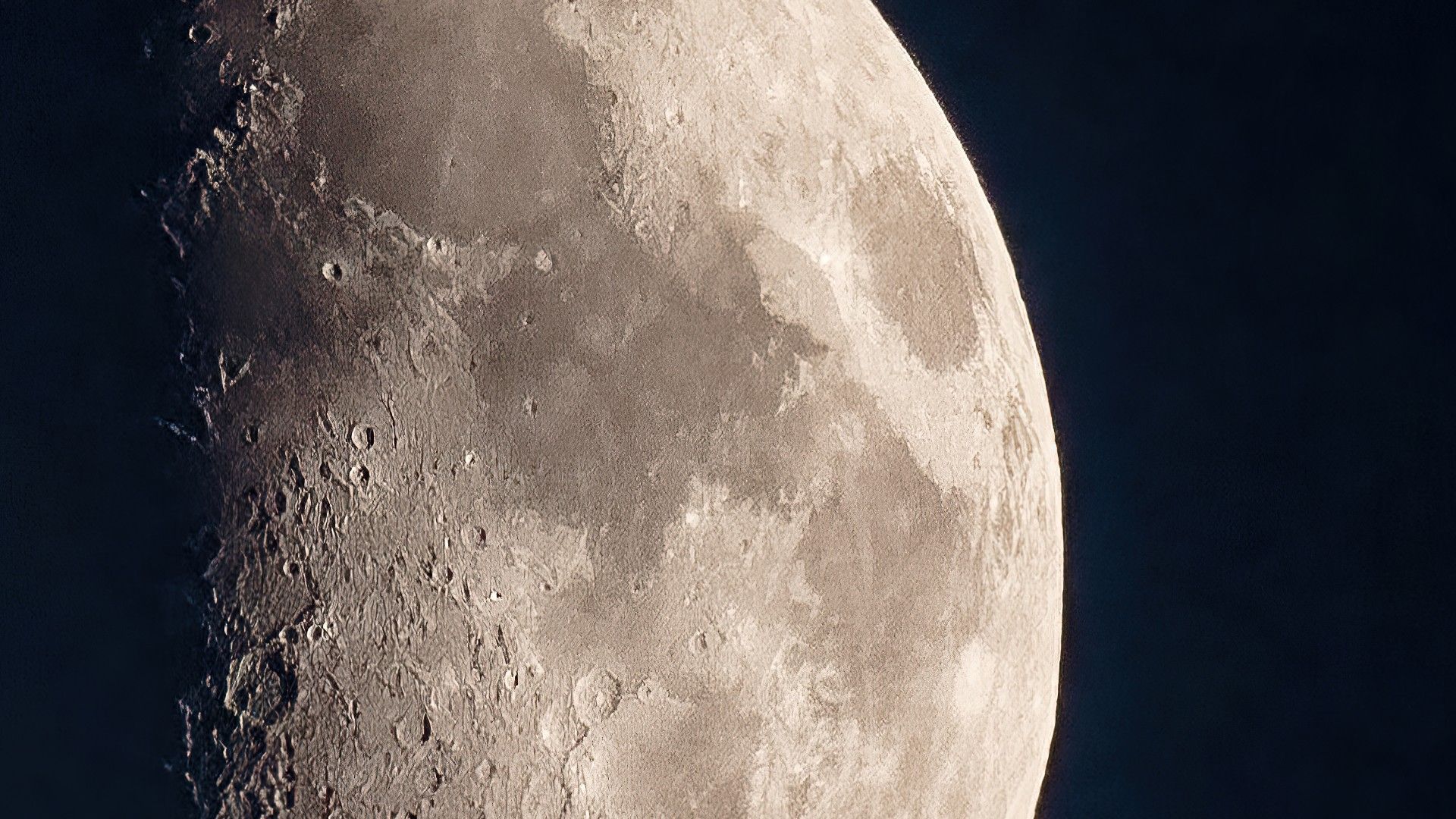
The moon reaches first quarter on Oct. 18, making stargazing tricky this week. That means I'm changing what I observe rather than declaring the week a write-off. The moon itself becomes an excellent target in early evening around first quarter. Sunlight strikes the lunar landscape along the terminator — the boundary between lunar day and night — throwing mountains and crater rims into strong relief. A cheap pair of binoculars can reveal a surprising amount. With a telescope, you can spend hours getting lost in the Montes Apenninus mountain range and three nearby craters — Eratosthenes and Archimedes on either side, and Plato above. Saturn remains another easy evening target after its Oct. 4 opposition. Look toward the eastern and southeastern sky after dark for its steady yellowish light. Even a modest telescope pointed at Saturn's rings will astound.
Constellation of the week: Cassiopeia
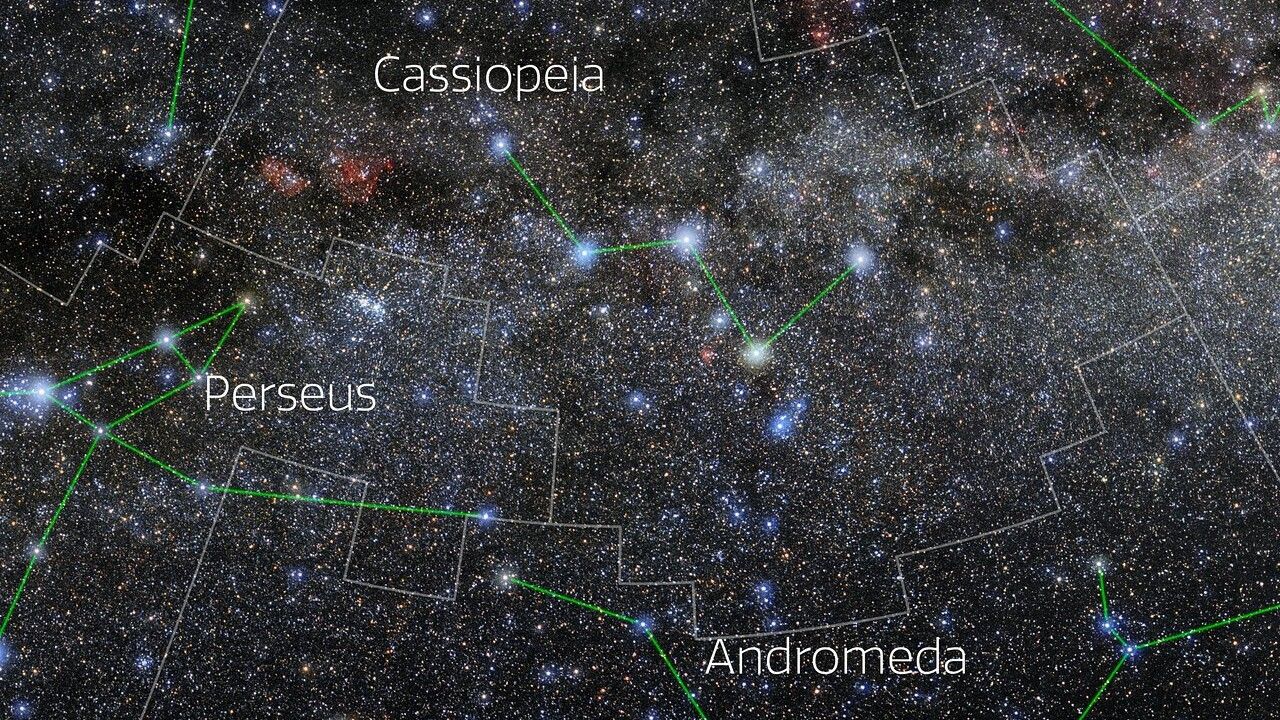
Cassiopeia is one of the easiest constellations I know to find because its five main stars form a conspicuous W — or, right now, something that looks suspiciously more like an M. Look toward the northern sky in the evening. From mid-northern latitudes, Cassiopeia is high and prominent during autumn, on the opposite side of Polaris from the Big Dipper. That relationship is more useful to me than memorizing exactly which way the W should point. Cassiopeia circles Polaris as Earth rotates, so its orientation changes through the night. From sufficiently northerly locations, it's circumpolar, meaning it never sets below the horizon.
from Latest from Space.com https://ift.tt/TGPfRcr
Comments
Post a Comment