Space Force orders 36 more Golden Dome missile-tracking satellites, for $1.75 billion
The U.S. Space Force is adding three dozen spacecraft to its growing constellation designed to detect and track incoming missiles from orbit. The Space Development Agency (SDA) announced the agreements, worth a combined $1.75 billion, on July 14, naming L3Harris Technologies and Sierra Space as the recipients.
Each company will provide 18 Accelerated Missile Defense Tranche 3 (AMDT3) spacecraft, for a total of 36 satellites that will grow the SDA Proliferated Warfighter Space Architecture's Tranche 3 Tracking Layer constellation, part of the Trump Administration's Golden Dome initiative. All 36 are expected to be ready for launch by the end of 2028, according to an SDA statement.
SDA's contracts with each company differ slightly. One calls for "18 missile warning and missile tracking variant space vehicles" from Sierra Space, while the other requests "18 missile defense variant space vehicles" from L3Harris, all equipped with infrared sensors to add to the constellation's global network.
L3Harris will receive up to $955 million for its 18 satellites, which the Space Force describes as "Hypersonic and Ballistic Tracking Space Sensor-like" (HBTSS) spacecraft. Sierra Space's agreement has the potential to reach $798 million for its 18-satellite contribution. Altogether, the 36 spacecraft will be distributed across four orbital planes as part of a hybrid missile-defense architecture designed to provide "global stereo coverage" of next-generation missile threats.
The Tracking Layer uses infrared imaging in low Earth orbit to detect and track missiles, and it transfers that data in real time through a low-latency communications network to military forces on the ground. According to the agency, the new satellites will increase the constellation's coverage and integrate into the spacecraft of SDA's first three Tranches.
“AMDT3 expands upon SDA’s previous and current Tracking Layer generations — Tranches 1, 2 and 3," said SDA Director G.P. Sandhoo, "marking another milestone in delivering a resilient, global missile warning, missile tracking, and missile defense capability.”
Sierra Space will base its satellites on the Horizon vehicle, from the company's Eclipse satellite series, which it also used in the design of the spacecraft it provided for the Tranche 2 Tracking Layer program, according to a Sierra Space release.
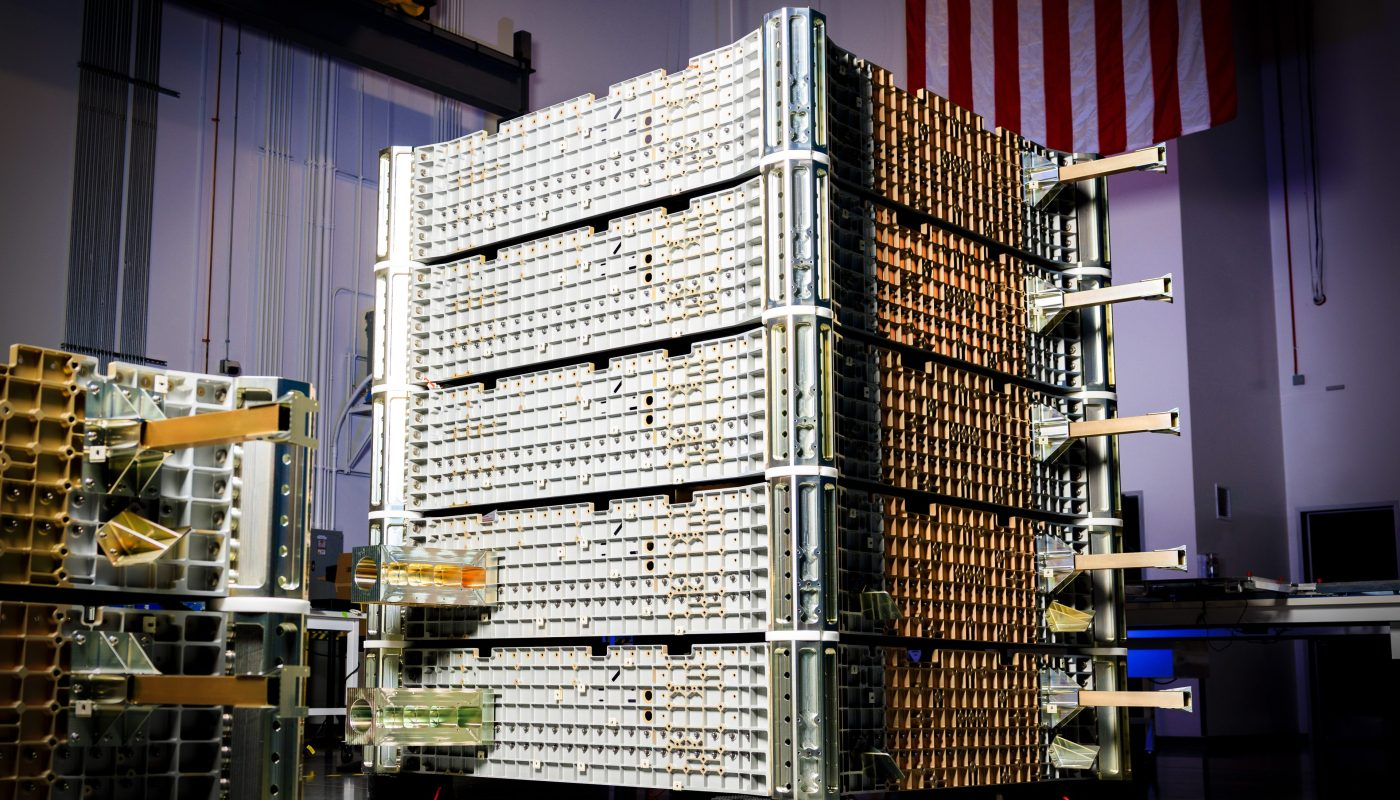
L3Harris plans to build on the success of the HBTSS satellites the company developed for the Military Defense Agency, according to an L3Harris release. The company "has more than 70 missile tracking and defense satellites on order, including five on orbit, between MDA’s HBTSS program and SDA’s Tracking Layer across Tranche 0, 1, 2 and 3," the company said.
The 36 satellites from L3Harris and Sierra Space are in addition to the 72 Tranche 3 Tracking Layer spacecraft SDA ordered in December 2025, via contracts worth $3.5 billion. L3Harris was included in those agreements as well, along with Lockheed Martin, Rocket Lab and Northrop Grumman. In total, the two rounds of awards bring the Tranche 3 constellation to a planned 108 satellites, worth about $5.25 billion. If all goes to plan, all of them will be available to launch by the end of 2029.
The newly contracted satellites from L3Harris and Sierra Space could begin heading to space sooner than that, however. SDA describes the new contracts as "accelerated," though a launch timeline has not been established to the overall group. Once in orbit, the Space Force will assume responsibility for the satellites' operation and integration "in support of joint force operations and delivering warfighting capabilities," the SDA statement said.
from Latest from Space.com https://ift.tt/zsnT79u
Comments
Post a Comment